 |
SOMMERKAMP FT-277 Japan - 1972 |
 |
|
|
SOMMERKAMP FT-277 Japan - 1972 |
|
 English |
 |
 Italiano |
|
 Sommerkamp model FT-277 - Switzerland
- Lugano/Ticino (manufactured by Yaesu-Musen Co.
Ltd., Tokyo, Japan) - 1972.
Sommerkamp model FT-277 - Switzerland
- Lugano/Ticino (manufactured by Yaesu-Musen Co.
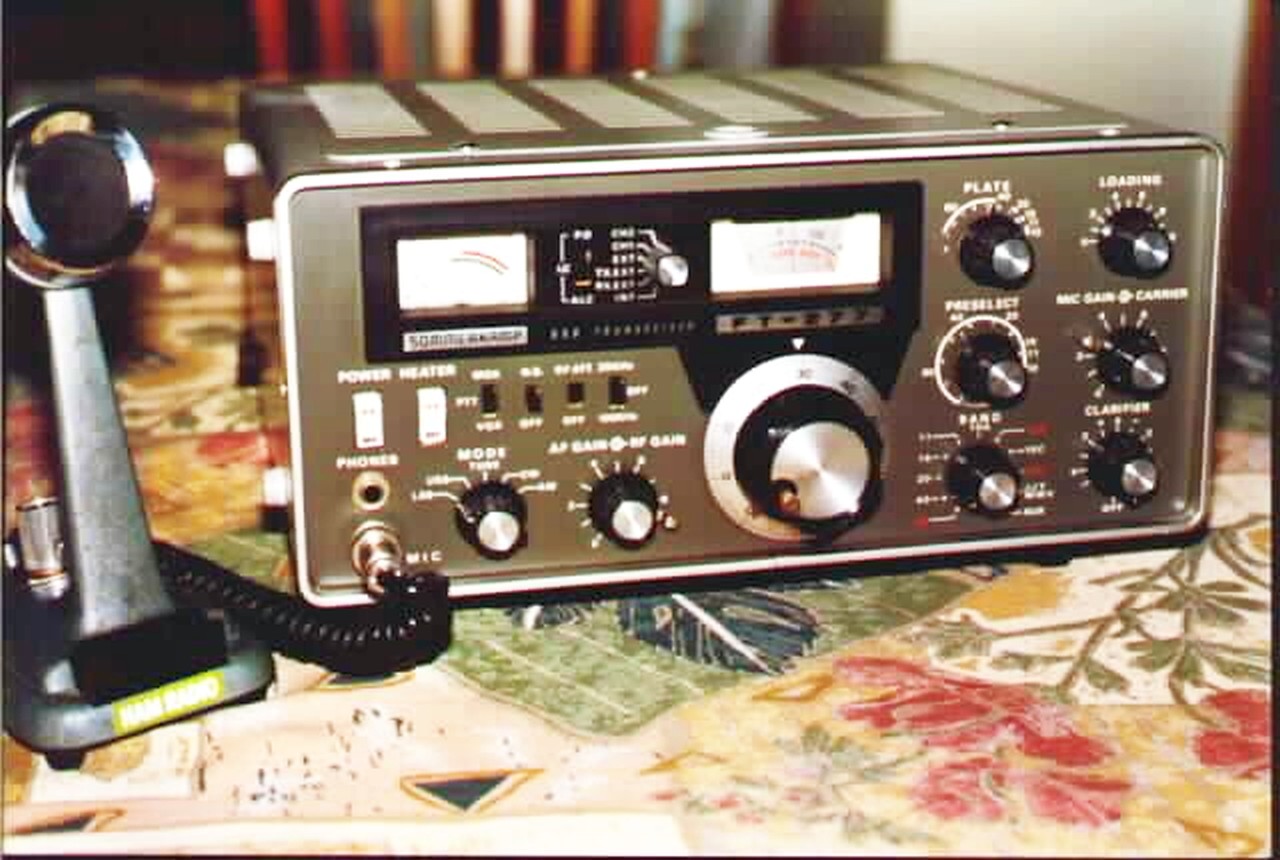
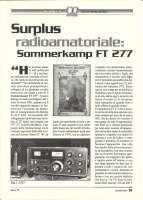
Ltd., Tokyo, Japan) - 1972.The FT-277 is an HF SSB transceiver for amateur bands, and is the Sommerkamp-branded copy of the more famous Yaesu model FT-101 made in Japan. It covers the 80- to 10-meter bands in SSB, CW, and AM modes, with 10-10.5 MHz for receive only. The nominal RF output power is 260 watts in SSB and CW and 50 watts in AM. The transmitter has a 12BY7A vacuum tube in the driver stage and two 6JS6C beam power pentodes in the final stage. All other active components in the circuit are silicon transistors, FETs, and some integrated circuits. Frequency coverage across the various bands is as follows: 80 m (3.5-4.0 MHz); 40 m (7.0-7.5 MHz); 30 m (10.0-10.5 MHz RX only); 20 m (14.0-14.5 MHz); 15 m (21.0-21.5 MHz); 11 m (26.900-27.500); 10 m (28.0-30.0 MHz divided into 4 bands). Operating modes are: LSB, USB, CW, and AM. Receiver sensitivity: SSB/CW 0.5 microvolts for 10 dB S/N. Audio output: 3 watts into 4 ohms. Microphone impedance: 500-600 ohms. Power requirements: Internal power supply for 110-220 VAC or external DC source 12 V max 21 A, negative ground. Dimensions are 13.4 x 6.1 x 11.2 inches, and weight is 133 lb 0.6 oz. Optional options include the FV-277B (or FV-101B) external VFO, which allows you to control receive or transmit operations, and the SP-277B (or SP-101B) auxiliary speaker. In the early 2000s, after receiving this rig as a gift from a colleague, I repaired it, put it back into operation, paired it with a Turner +2 desktop microphone, and used it extensively for DXing, contests, and awards. The description of the work was published in the March 2002 issue of CQ Elettronica. © IK3HIA, 2025. |
|||
 |
 |
 |
 |
 Sommerkamp mod. FT-277 - Svizzera -
Lugano/Ticino (prodotto da Yaesu-Musen Co. Ltd.
Tokyo, Giappone) - 1970.
Sommerkamp mod. FT-277 - Svizzera -
Lugano/Ticino (prodotto da Yaesu-Musen Co. Ltd.
Tokyo, Giappone) - 1970.L'FT-277 è un ricetrasmettitore HF SSB per le bande amatoriali, ed è la copia con il marchio Sommerkamp del più famoso Yaesu modello FT-101 costruito in Giappone. La copertura di frequenza è con bande da 80 a 10 metri con funzionamento in modalità SSB, CW e AM, 10-10,5 MHz solo in ricezione. La potenza nominale di uscita in RF è di 260 watt in SSB e CW e 50 watt in AM. Il trasmettitore utilizza una valvola 12BY7A nello stadio pilota e due pentodi di potenza a fascio 6JS6C nello stadio finale a RF. Tutti gli altri componenti attivi del circuito sono transistor al silicio, fet e circuiti integrati montati sulle schede dei vari circuiti, tutte le schede sono estraibili facilitando in tal modo la manutenzione. La copertura di frequenza nelle varie bande è la seguente: 80 m (3,5-4,0 MHz); 40 m (7,0-7,5 MHz); 30 m (10,0-10,5 MHz solo RX); 20 m (14,0-14,5 MHz); 15 m (21,0-21,5 MHz); 11 m (26,900-27,500); 10 m (28,0-30,0 MHz suddivisi in 4 bande). Le modalità operative sono: LSB, USB, CW e AM. Sensibilità del ricevitore: SSB/CW 0,5 microvolt per 10 dB S/N. Uscita audio: 3 watt su 4 ohm. Impedenza del microfono: 500-600 ohm. Requisiti di alimentazione: alimentatore interno per 110-220 V CA o sorgente CC esterna 12 V max 21 Ampere, negativo a massa. Le dimensioni sono: 34 x 15,5 x 29 cm e il peso è15 kg. Sono disponibili come opzioni il VFO esterno FV-277B (o FV-101B), che consente di controllare le operazioni di ricezione o trasmissione, e l'altoparlante supplementare mod. SP-277B (o SP-101B). All'inizio degli anni 2000, dopo aver ricevuto questo apparato guasto in regalo da un collega, l'ho riparato e rimesso in funzione, l'ho abbinato a un microfono da tavolo Turner +2 e l'ho utilizzato lungamente per fare collegamenti DX, partecipare a contest e a diplomi. La descrizione del lavoro fatto è stata pubblicata sulla rivista CQ Elettronica del marzo 2002. © IK3HIA, 2025. |
|||
Return to top of page
 Torna a inizio pagina
 |
|||
| Return to IK3HIA home page | Return to Old Ham Radio page |