 |
General Electric
P-673 U.S.A. - 1956 |
 |
|
|
General Electric
P-673 U.S.A. - 1956 |
|
 Considerations
Description
Restoration
Considerations
Description
Restoration |
 |
Considerazioni
 Descrizione Restauro |
||
 Click on
the images to enlarge Click on
the images to enlarge  Clicca sulle immagini per ingrandire
 |
||||
 |
 |
 |
 |
|
|
General Electric P-673 -
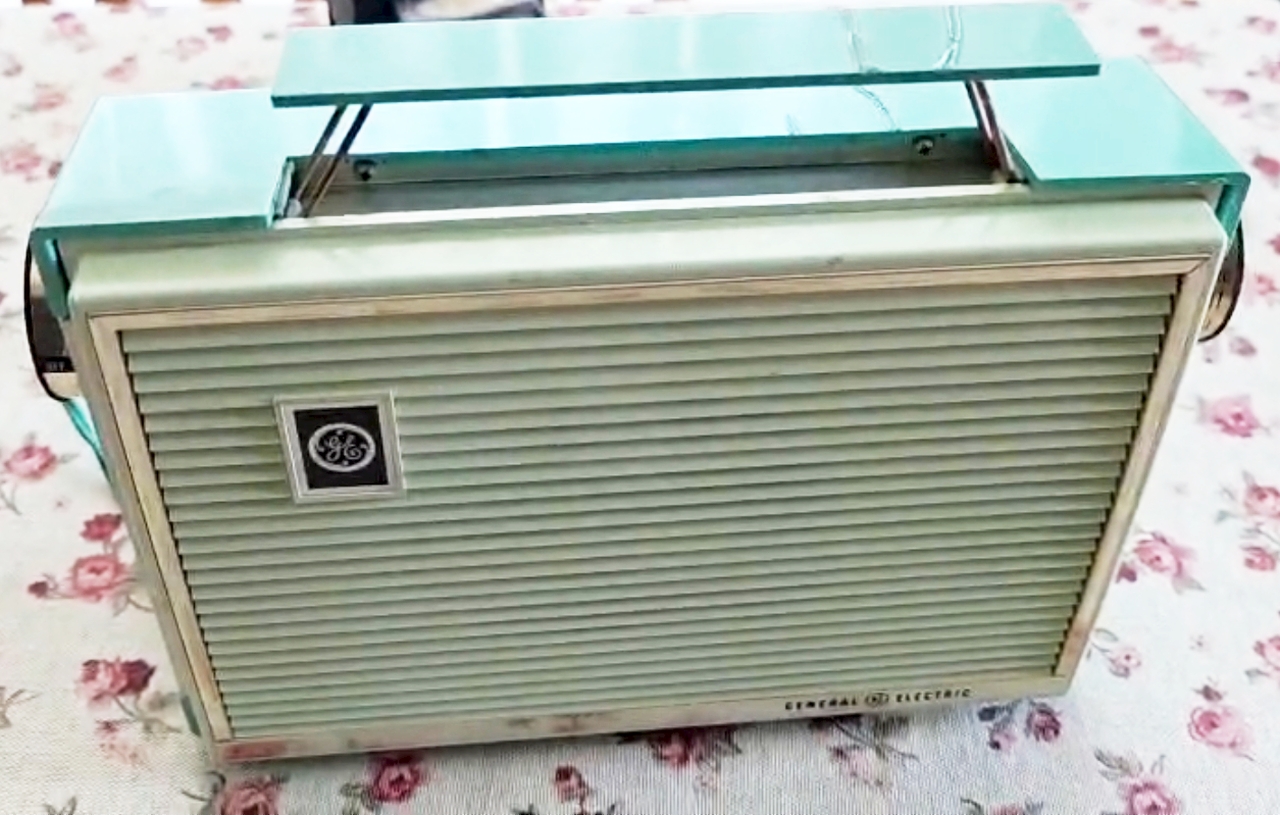
General Electric Co. - Bridgeport CT, Syracuse NY - U.S.A. - 1956. Radio portatile a valvole con alimentazione a batterie o tramite rete prodotto e commercializzato a negli Stati Uniti dalla General Electric dalla metà degli anni '50. Era ormai arrivata l'era del transistor ma a metà anni '50 la tecnologia che utilizzava i tubi a vuoto era al massimo della sua evoluzione e le fabbriche USA avevano i magazzini pieni di componenti e le linee di produzione ben avviate che potevano sfornare rapidamente migliaia di esemplari. Tutto il contrario del Giappone nel quale i pesantissimi bombardamenti subiti durante la 2a guerra mondiale e la totale sconfitta avevano azzerato completamente le capacità di produzione esistenti. Ecco perchè nel dopoguerra, appena venuti a conoscenza della nuova tecnologia dei semiconduttori, i giapponesi seppero approfittarne rapidamente, approntarono ex novo fabbriche con linee di produzione di componenti miniaturizzati e adatti al nuovo minuscolo componente elettronico realizzato con il germanio e che soprattutto utilizzava un'unica bassa tensione di alimentazione. In pochi anni il Giappone acquisì la supremazia mondiale nella produzione di radio, TV mangianastri, mangiadischi, amplificatori etc. tutti di dimensioni ridotte. Un esempio è fornito dai micro ricevitori tascabili Sony TR-610 dei quali furono venduti milioni di esemplari in tutto il mondo e che divennero un termine di riferimento copiato da innumerevoli altre ditte in moltissime nazioni. Comunque, nella metà degli anni '50, gli statunitensi erano ancora all'avanguardia della tecnologia, nel 1954 la Regency di Indianapolis aveva realizzato e posto in commercio la TR1, il primo ricevitore tascabile a transistor. La General Electric non fu da meno e poco dopo nel 1955 commercializzò la radio a transistor "tascabile" G.E. 675. Qui è visibile un esemplare di General Electric 676 costruito nel 1956, lo stesso anno in cui veniva posta in commercio la P673 descritta in questa pagina. IK3HIA © 2026. |
||||
 |
 |
 |
 |
|
|
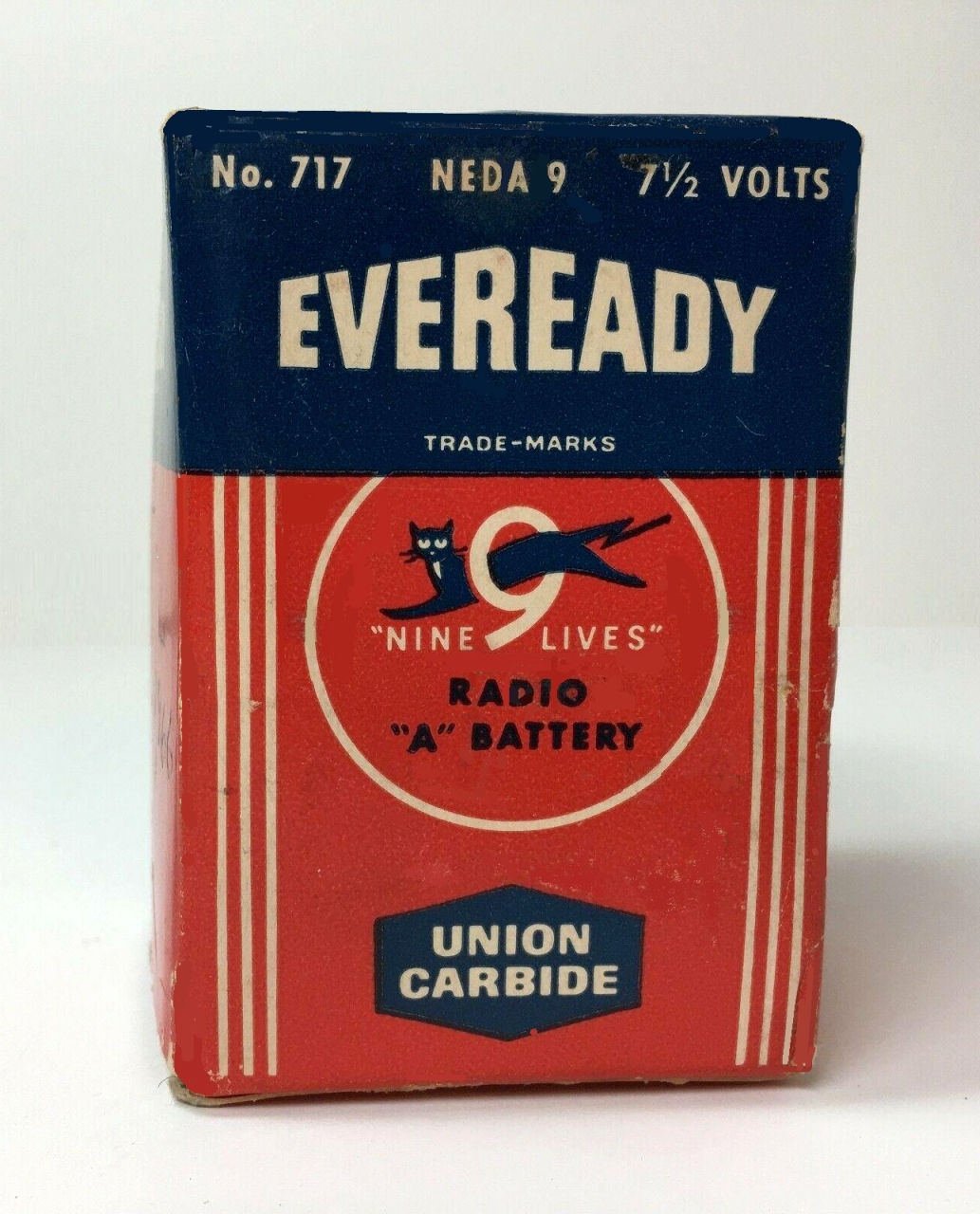
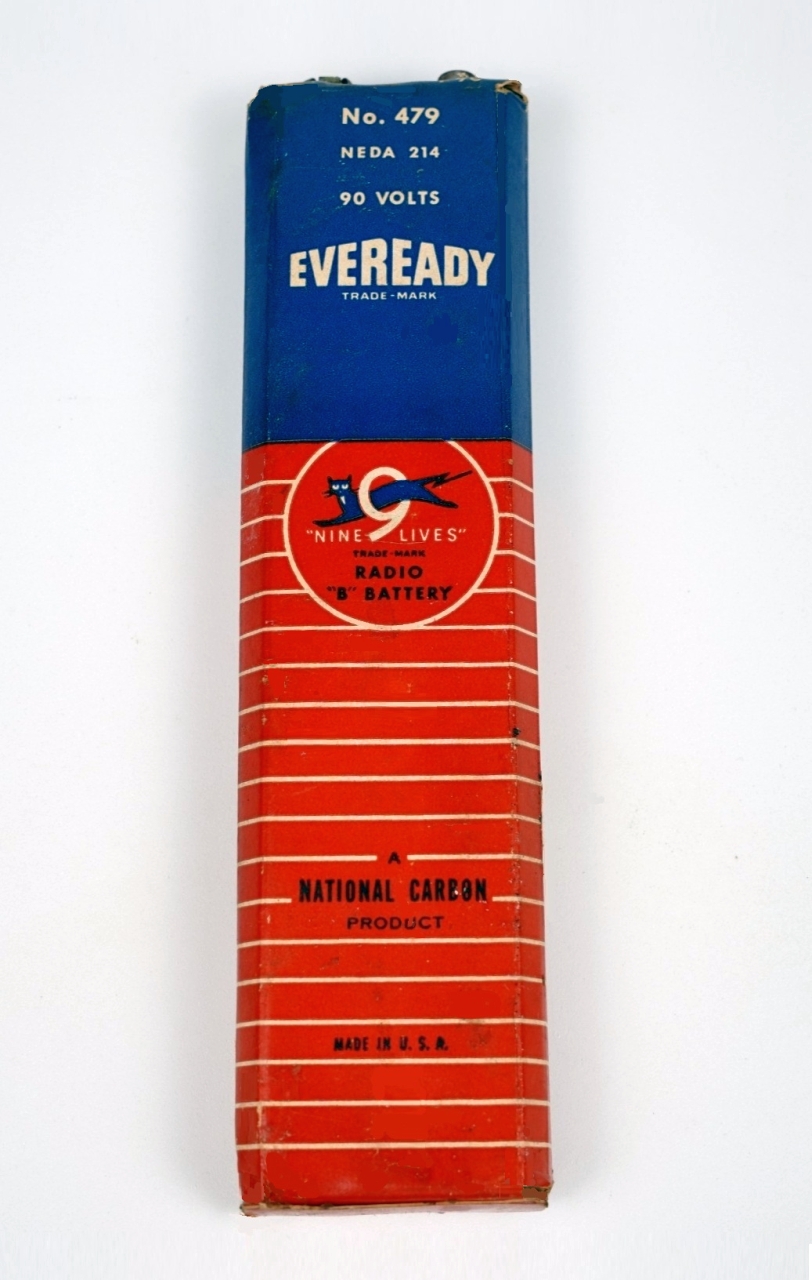
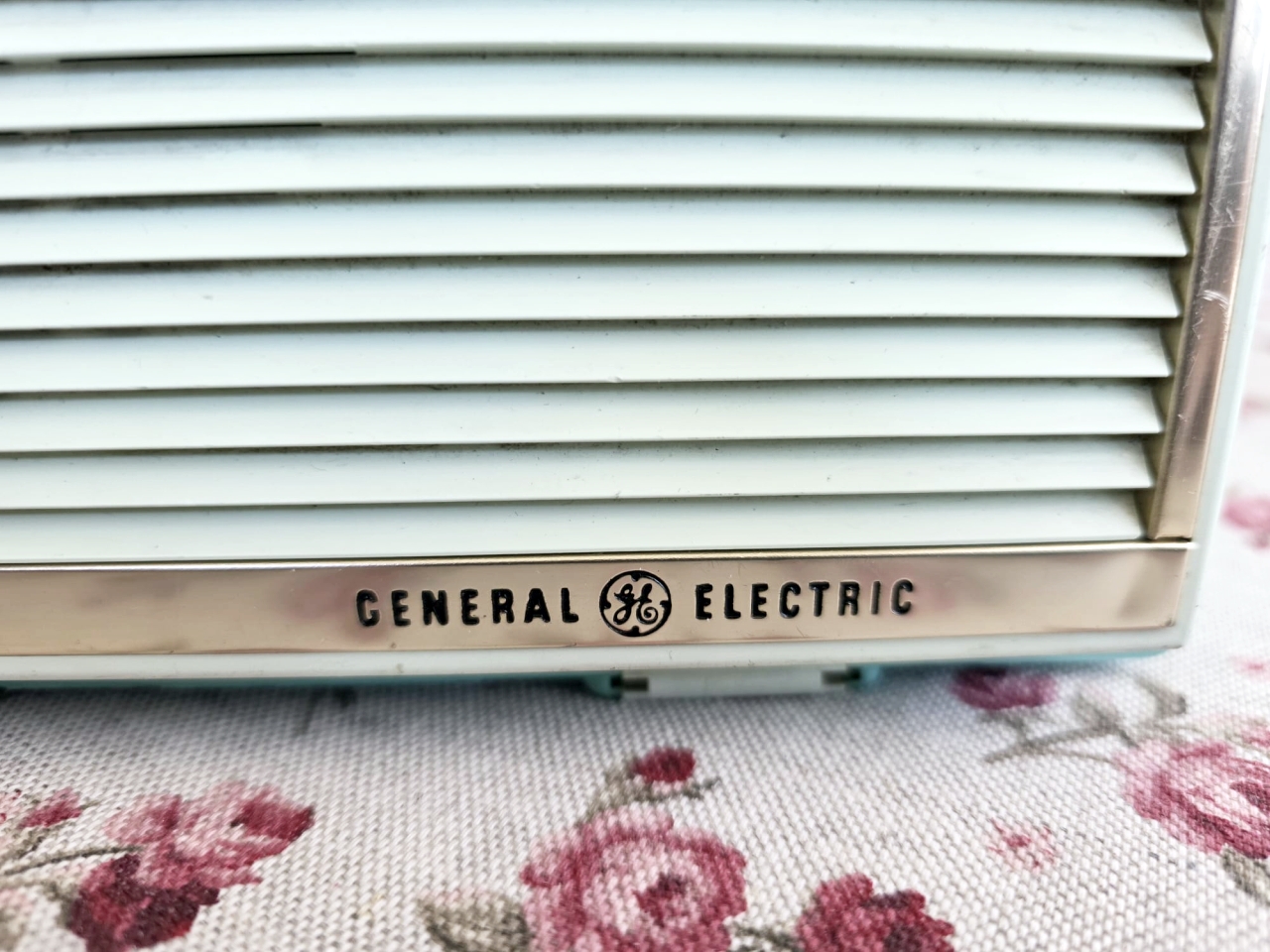
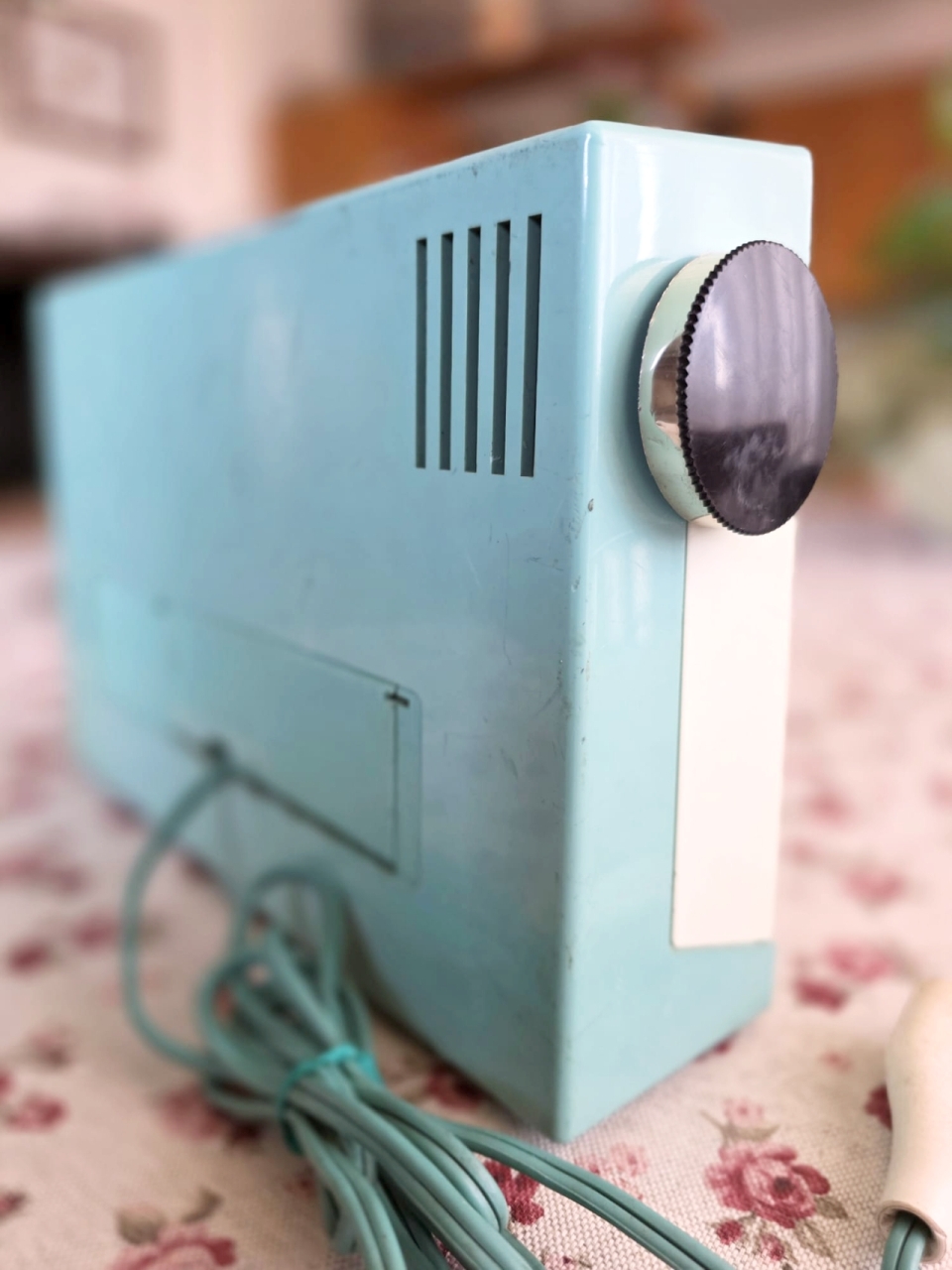
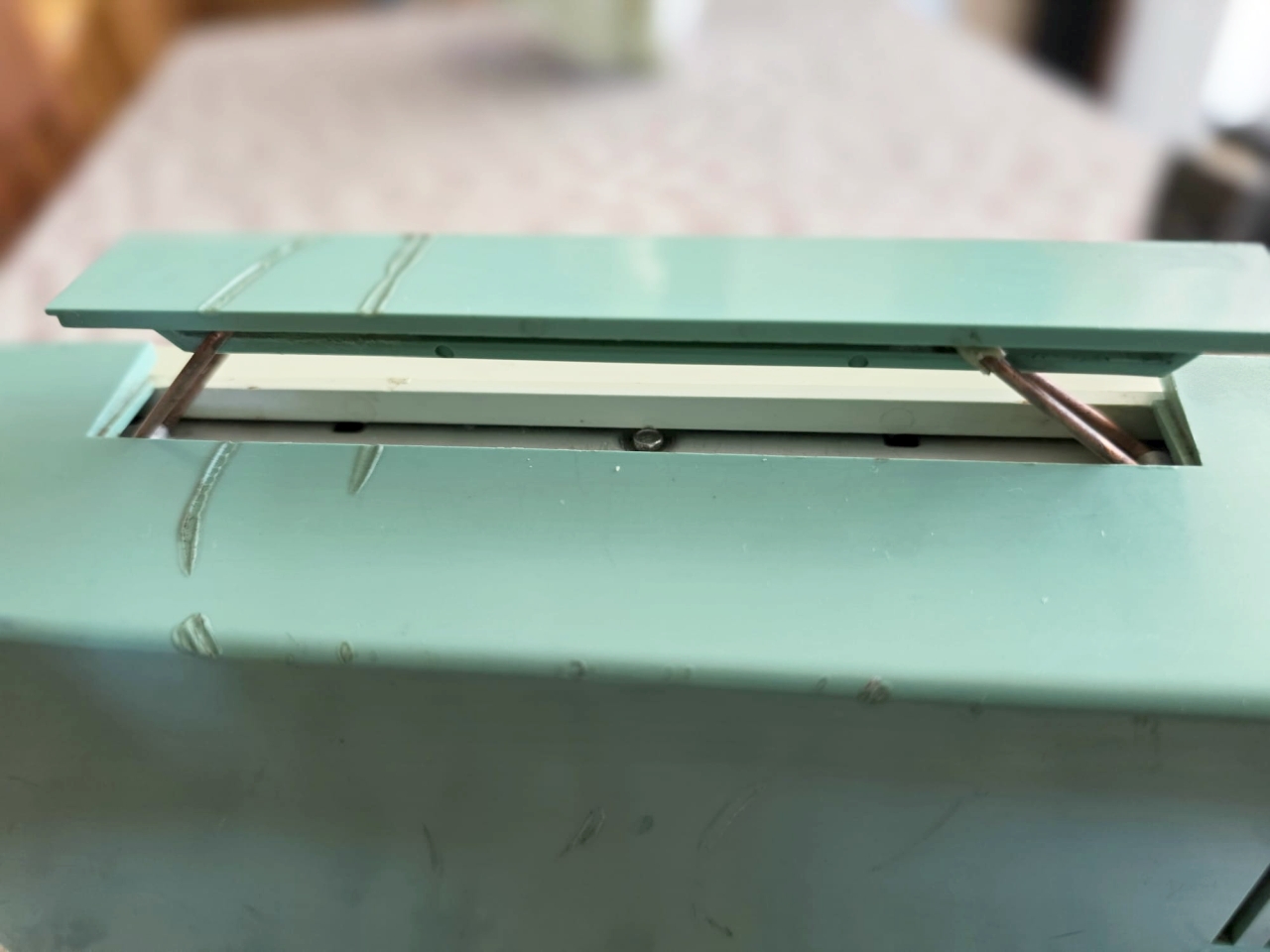
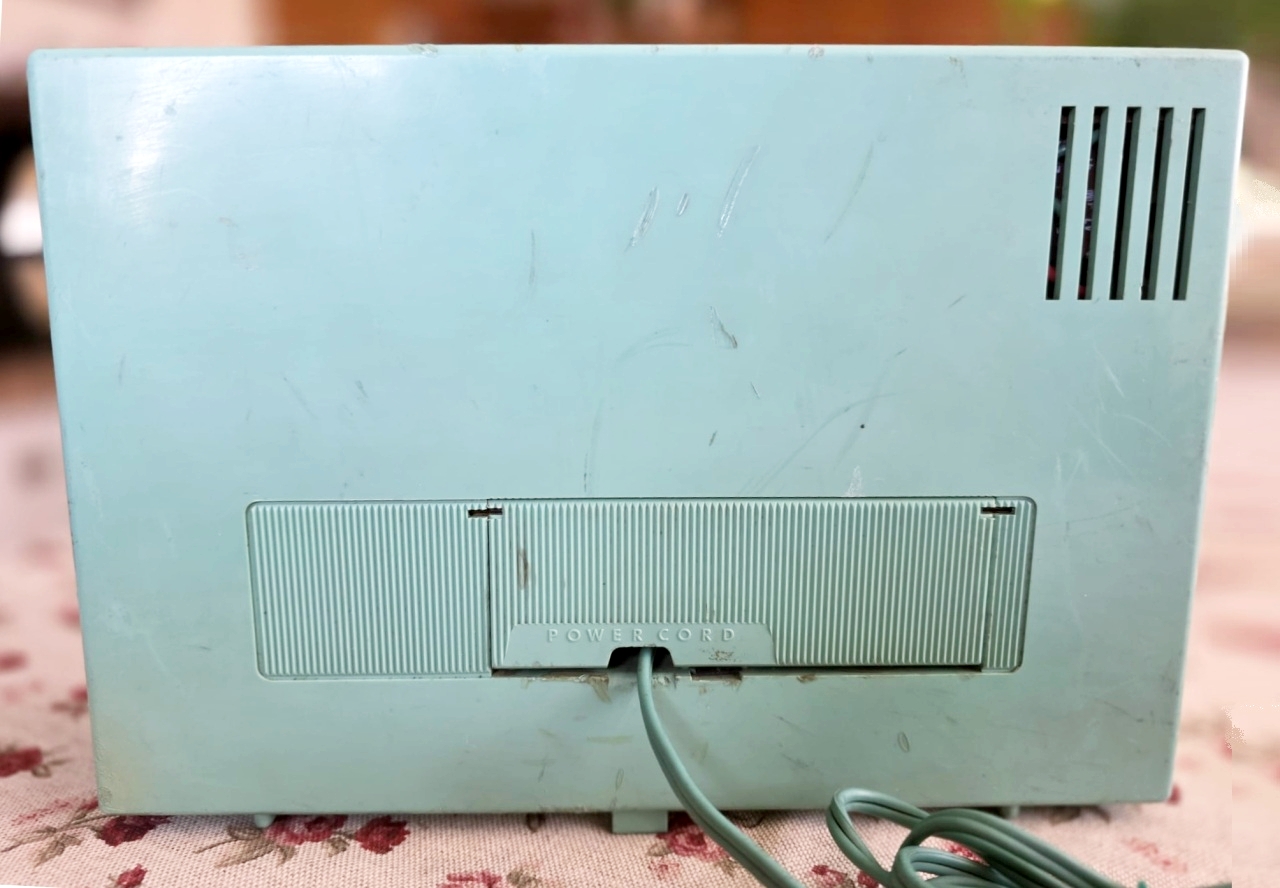
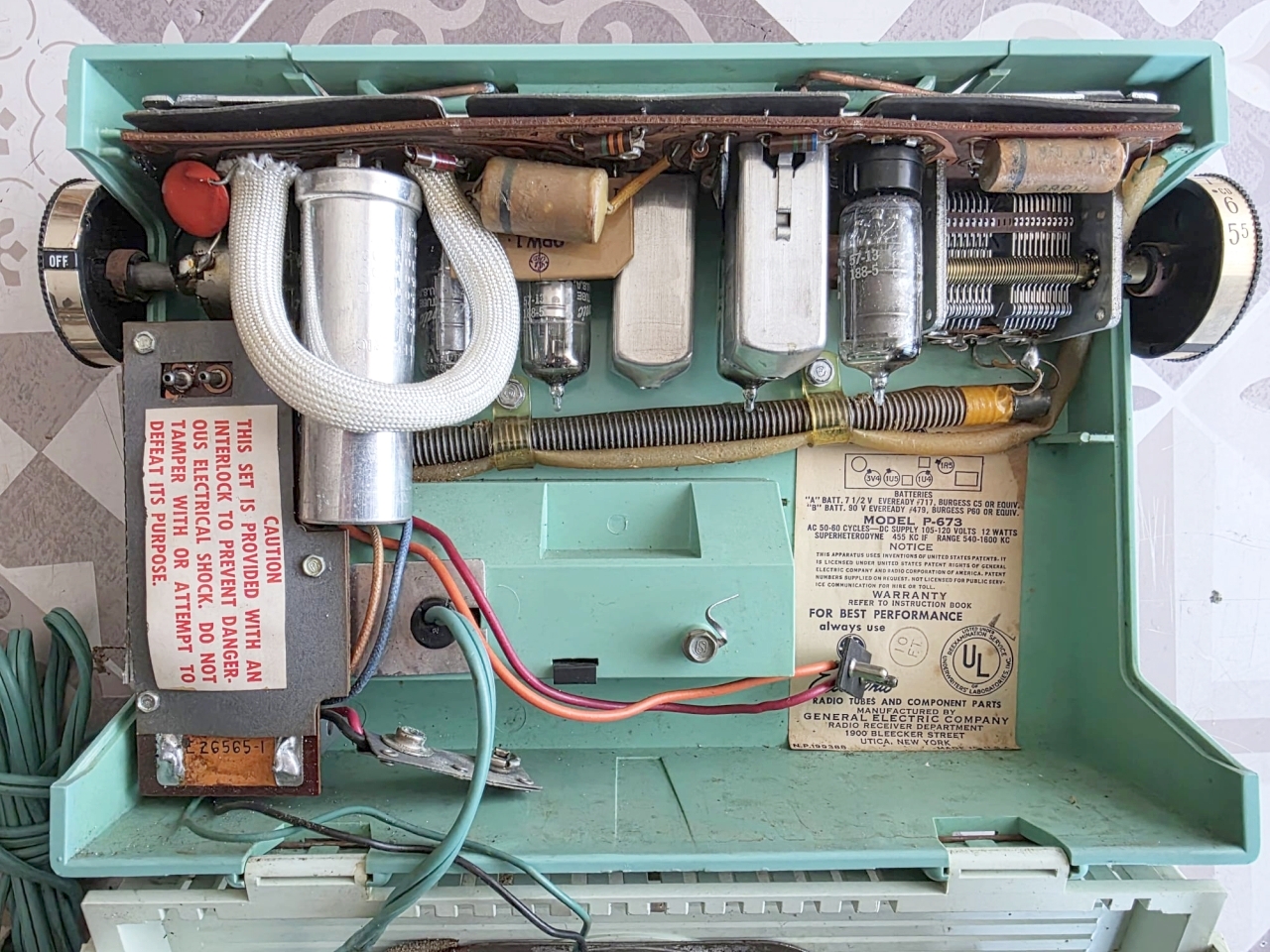
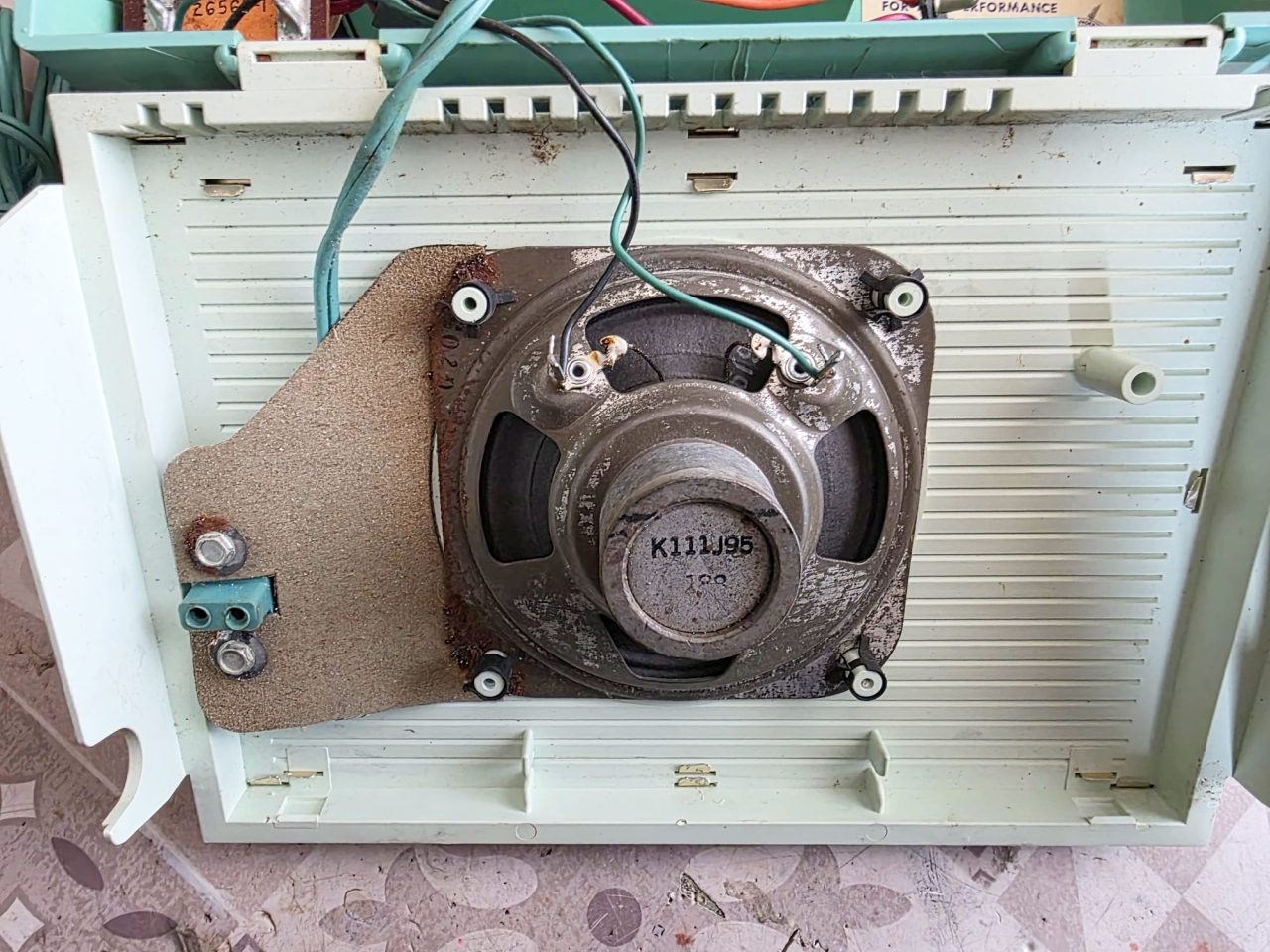
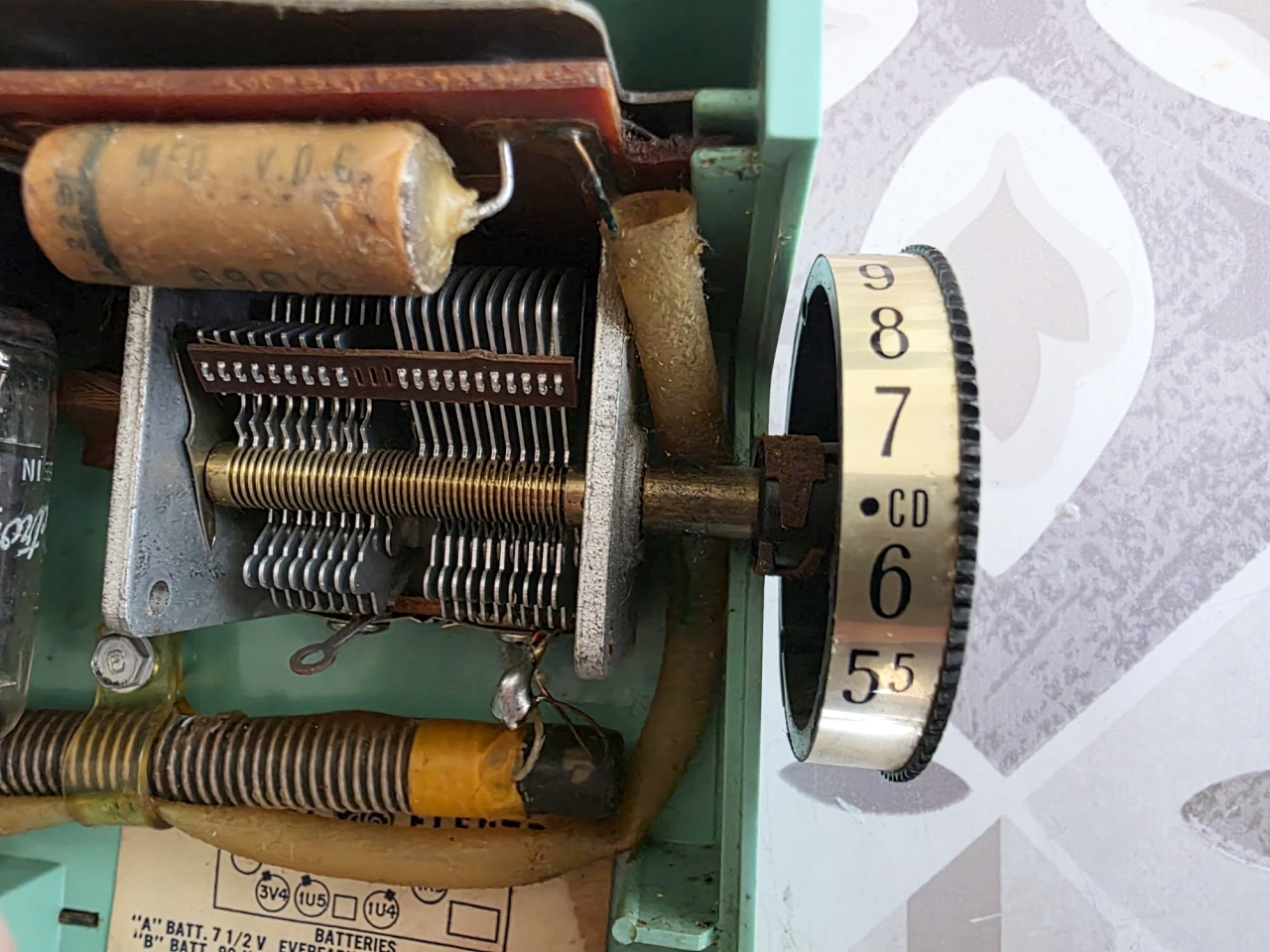
Descrizione. La P-673 era un ricevitore portatile supereterodina per Onde Medie che utilizzava quattro valvole del tipo miniatura a sette piedini: 1R5, 1U4, 1U5 e 3V4. Le valvole di questo tipo erano state progettate alla fine degli anni '30 negli USA per essere utilizzate negli apparati ricetrasmettitori portatili militari. Questa serie di tubi utilizzava la tensione di 1,4 V per i filamenti e 67 o 90 V per l'anodica, tutte tensioni fornite da batterie a secco. Terminata la 2a guerra mondiale, le stesse valvole vennero impiegate dai produttori di elettronica USA e di tutto il mondo (compresa l'Unione Sovietica) per costruire ricevitori radio portatili civili. La General Electric P673 impiegava sì le valvole, ma conteneva al suo interno anche alcune soluzioni tecniche pioneristiche per l'epoca. Ad esempio i vari componenti erano montati su due circuiti stampati a doppia faccia, con piste di rame che correvano sopra e sotto le basette isolanti. La radio inoltre utilizzava un'antenna interna avvolta su un lungo nucleo di materiale ferromagnetico che forniva alta sensibilità e direzionalità nella ricezione dei segnali. Altro elemento antesignano per l'epoca era uno speciale modulo integrato a nove piedini che al suo interno conteneva molte resistenze e capacità. Il condensatore variabile era ad isolamento ad aria, lo stadio di Frequenza Intermedia con la 1U4 risuonava a 455 kHz e lo stadio rivelatore / audio equipaggiato con la 1U5 e la 3V4 forniva 0,3 Watt all'altoparlante da Ø 4 inch / 10,2 cm e 4 Ohm di impedenza. L'alimentazione era fornita tramite batterie o dalla rete elettrica. Le batterie erano rispettivamente una Eveready #717 o una Burgess C5 da 7,5 V per i filamenti e una Eveready #479 oppure Burgess P60 da 90 V per l'anodica. La tensione alternata a 110 Vac della rete elettrica veniva invece raddrizzata da un raddrizzatore al selenio tipo GE K-139149 e tramite varie resistenze e condensatori elettrolitici di livellamento venivano prodotti i 7,5 Vdc, necessati per alimentare i filamenti delle valvole posti in serie, e i 90 Vdc per la tensione anodica. Il mobiletto era fatto con un materiale plastico infrangibile bicolore e la sigla dell'apparecchio identificava la combinazione dei colori (ad esempio il 670 era nero mentre il 673 era bianco/panna e verde/celeste). Il mobiletto era dotato di maniglia estraibile per il trasporto sulla parte superiore, di manopola interruttore/volume in alto sul lato sinistro e quella della sintonia in alto sul lato destro. Sulla manopola della sintonia della radio erano marcate con la sigla CD le due frequenze del sistema di allarme atomico CONELRAD adottato dagli Stati Uniti sin dall'inizio della Guerra Fredda con l'URSS. Il cavo di alimentazione per la rete era contenuto in un vano del mobile accessibile posteriormente con una presa in cui, se veniva infilata, la spina azionava il commutatore batterie-rete. Il peso dell'apparecchio senza batterie era di 1,52 kg 3 lb 5.8 oz e le dimensioni erano 25x17x8 cm / 9.84 x 6.69 x 3.15 in. IK3HIA © 2026. |
||||
 |
 |
 |
 |
|
|
General Electric P-673 -
General Electric Co. - Bridgeport CT, Syracuse NY -
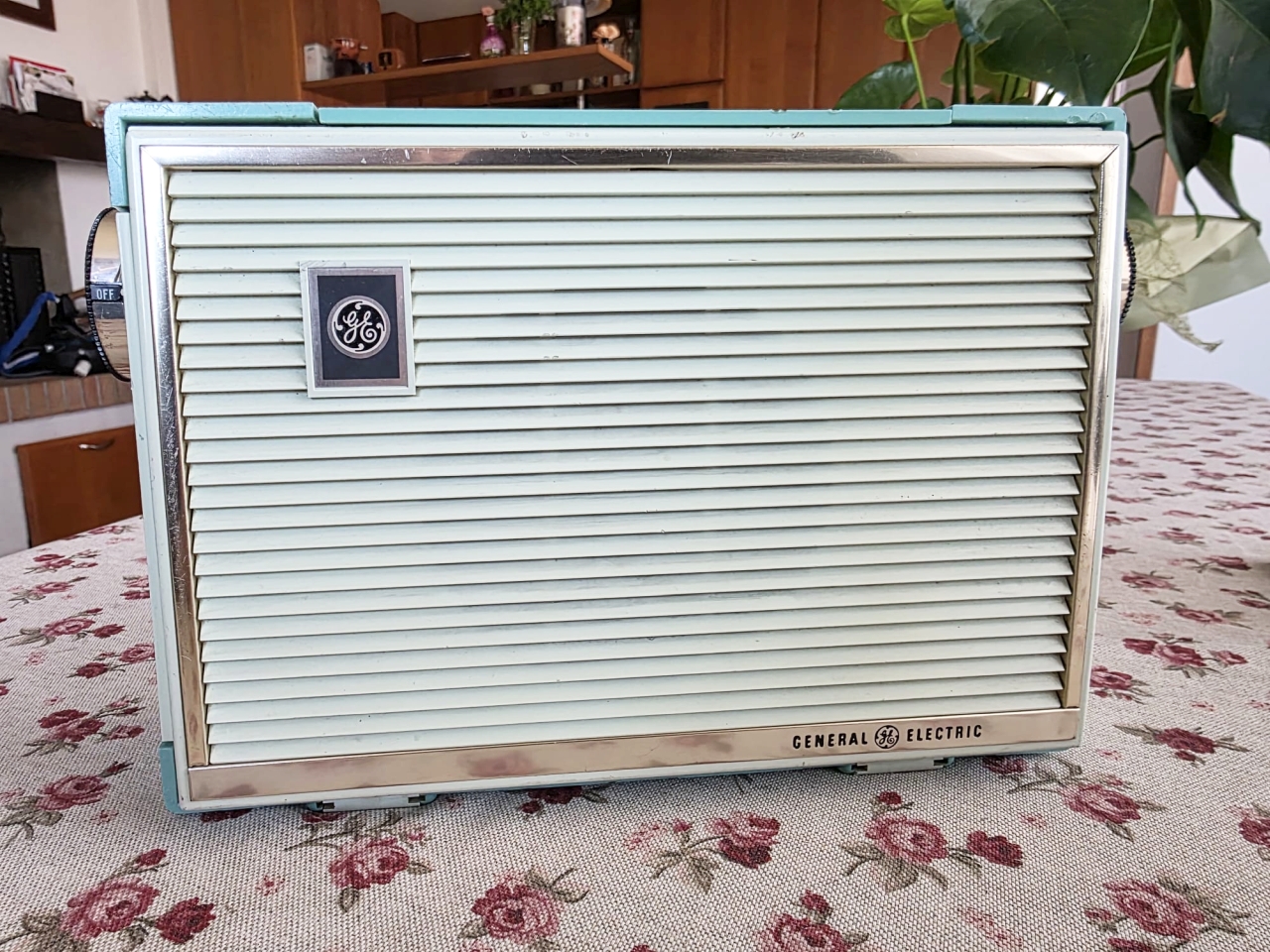
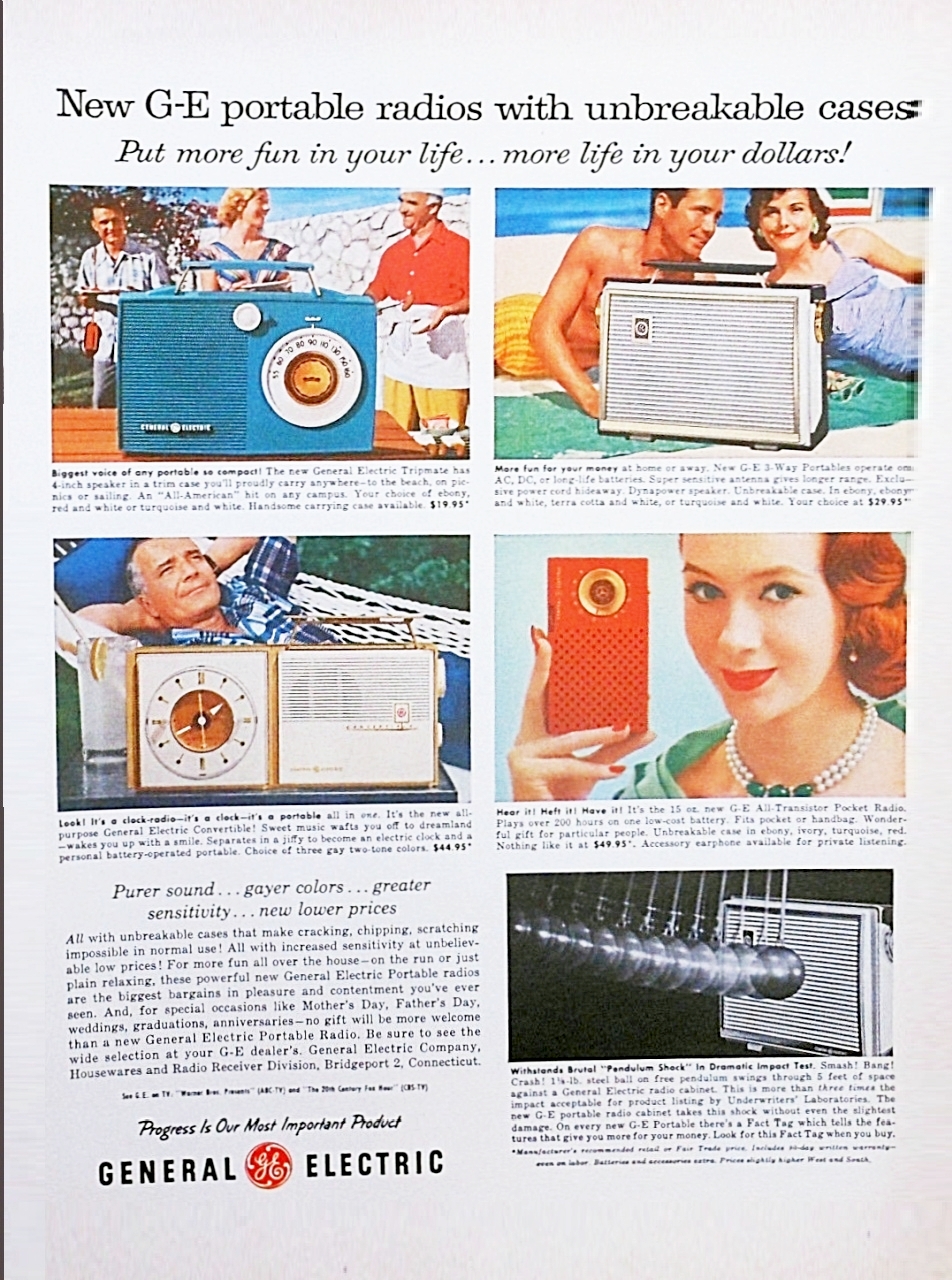
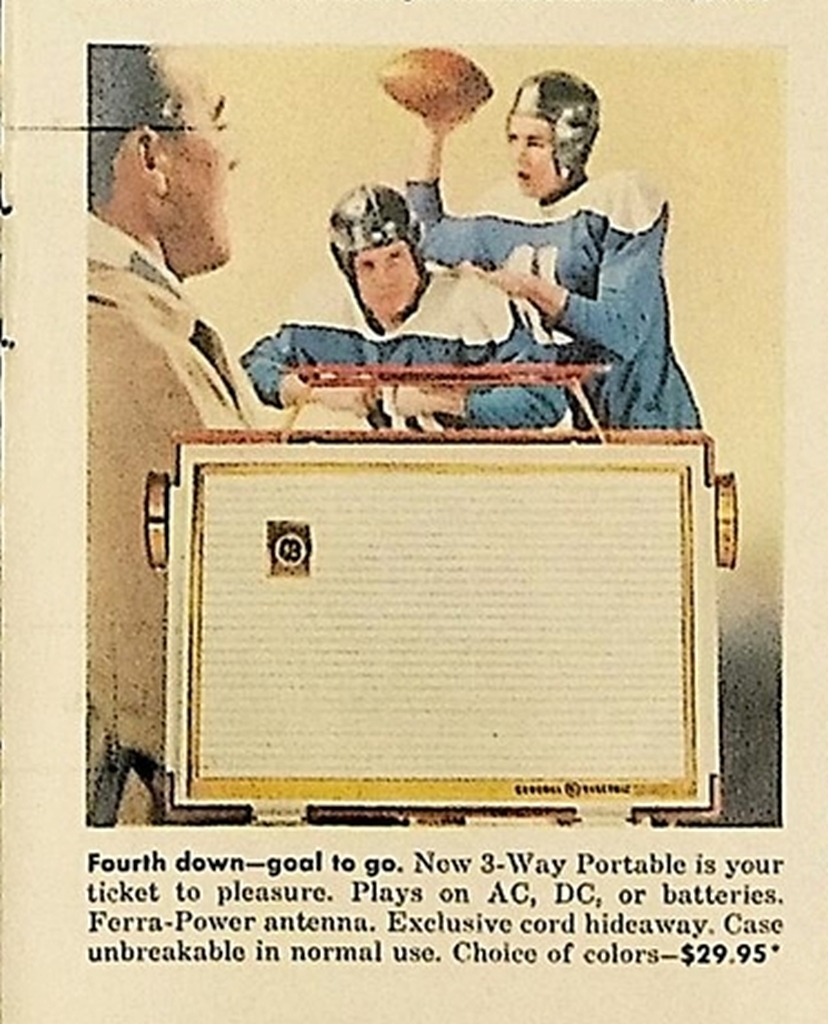
U.S.A. - 1956. Portable vacuum tube radio, battery- or mains-powered, manufactured and marketed in the United States by General Electric since the mid-1950s. The transistor era had arrived, but by in the mid-1950s, vacuum tube technology was at its peak, and U.S. factories had warehouses full of components and well-established production lines that could quickly churn out thousands of units. This was the complete opposite of Japan, where the heavy bombings suffered during World War II and its total defeat had completely wiped out existing production capacity. This is why, after the war, as soon as they learned about the new semiconductor technology, the Japanese quickly took advantage of it, setting up new factories with production lines for miniaturized components, suitable for the new tiny electronic component made from germanium and, more importantly, using a single, low-voltage battery for power supply. Within a few years, Japan had achieved world supremacy in the production of radios, televisions, cassette players, record players, amplifiers, and so on, all small in size. An example is the Sony TR-610 pocket-sized micro receiver, of which millions were sold worldwide and which became a benchmark copied by countless other companies in numerous countries. However, in the mid-1950s, Americans were still at the forefront of technology; in 1954, Regency of Indianapolis had developed and marketed the TR1, the first pocket-sized transistorized receiver. General Electric was no exception, and shortly thereafter, in 1955, it marketed the G.E. 675 transistor "pocket" radio. Here you can see a General Electric 676 built in 1956, the same year the P673 described on this page was released. IK3HIA © 2026. |
||||
 |
 |
 |
 |
|
|
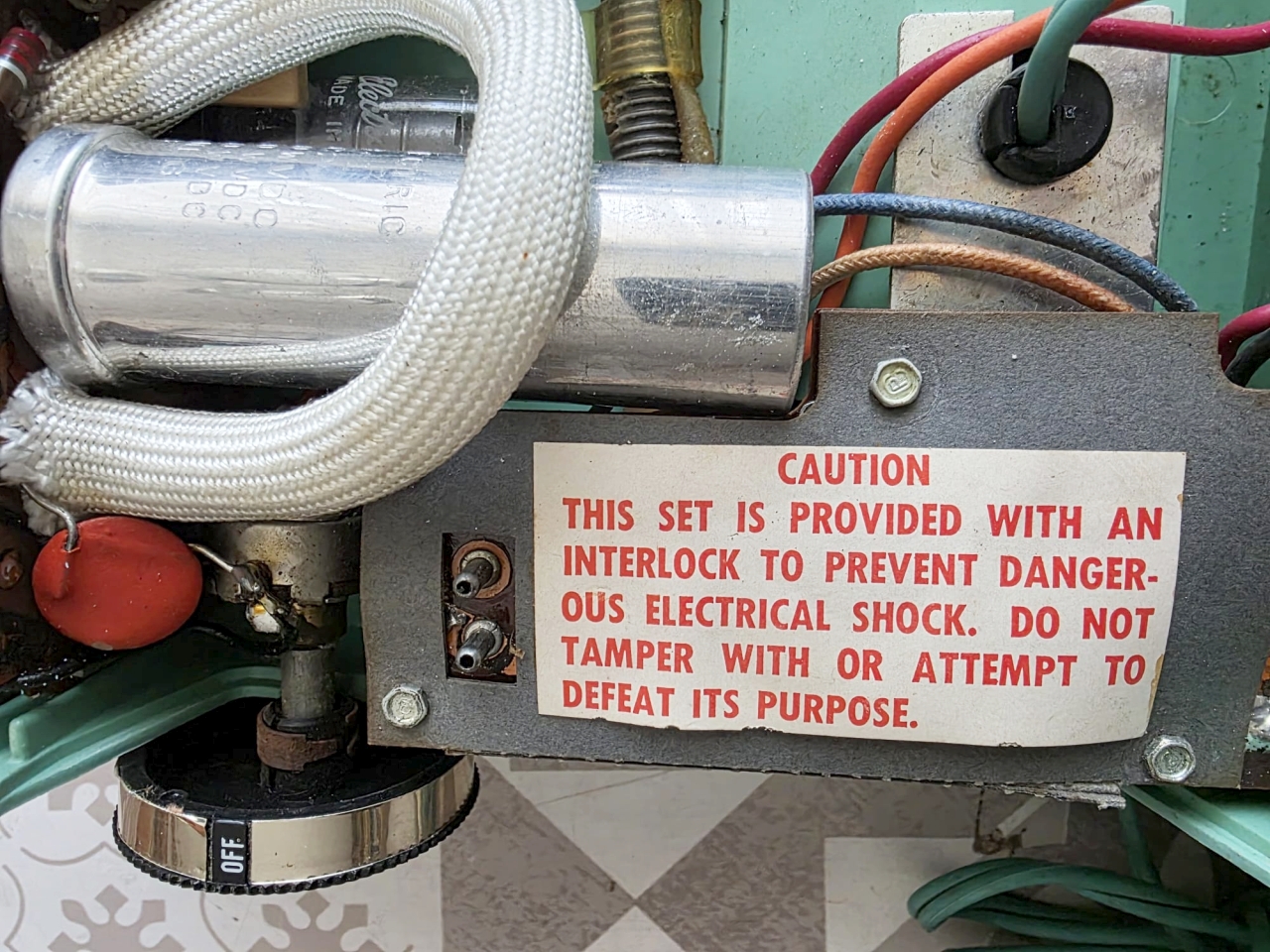
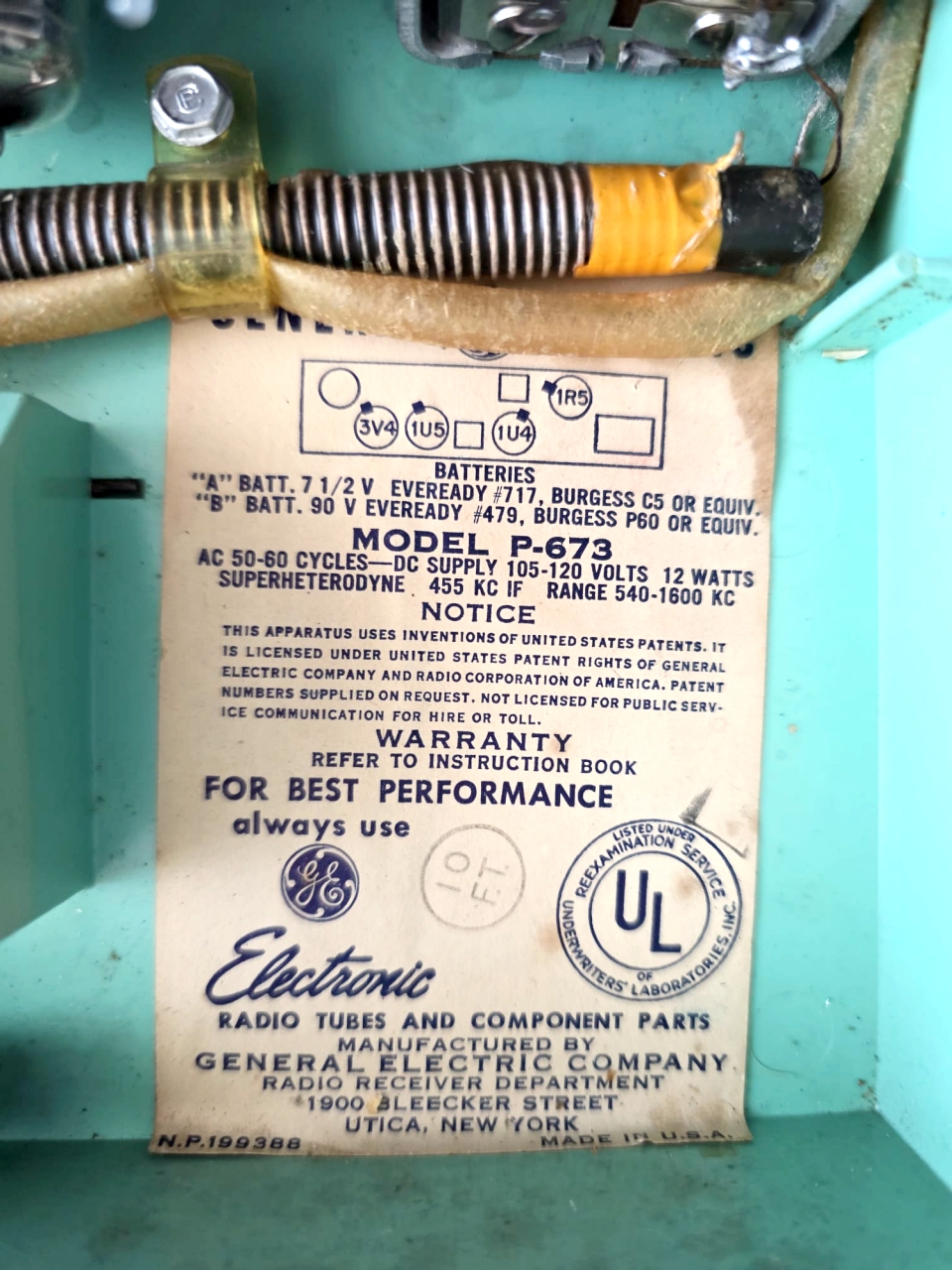
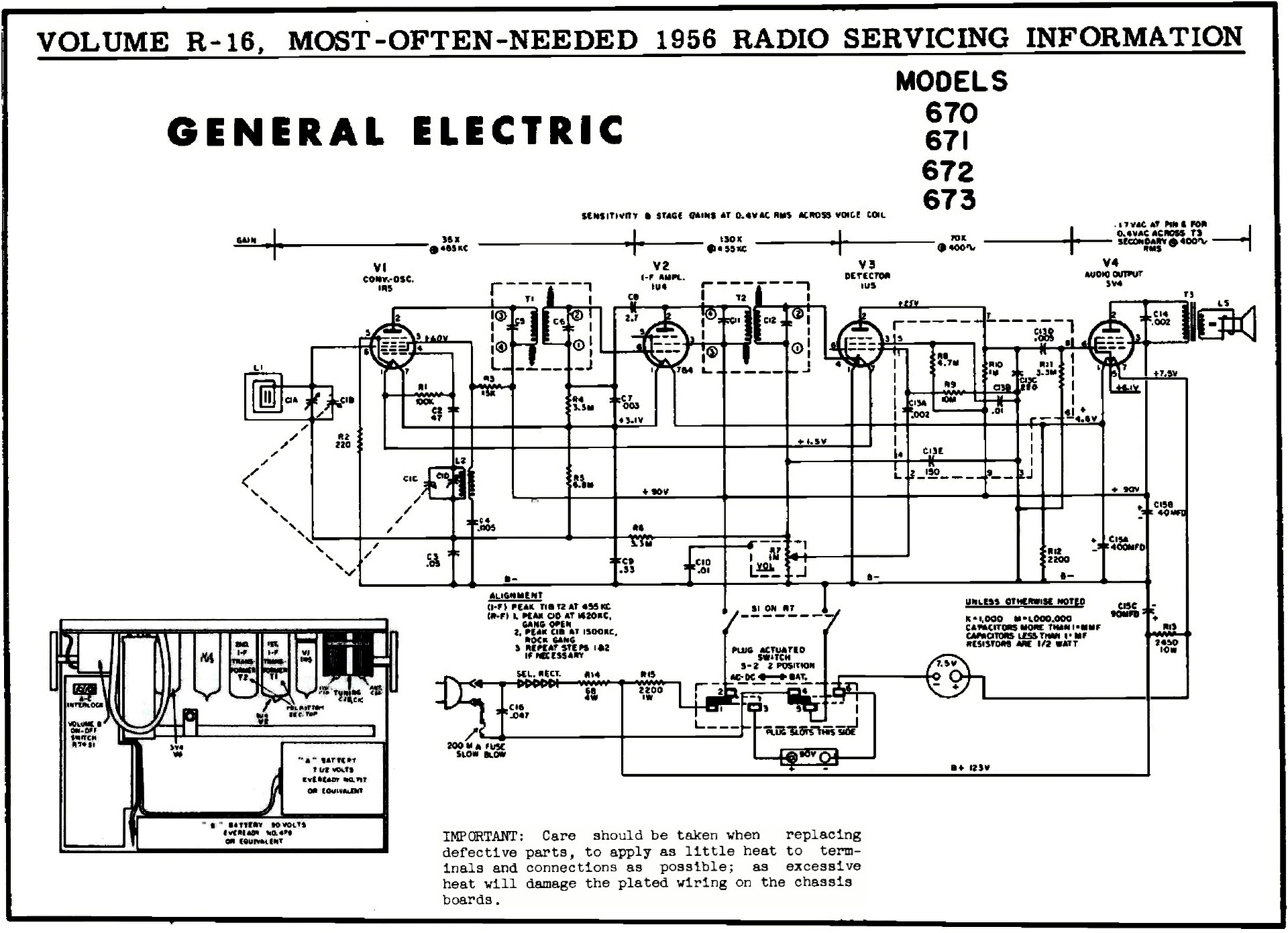
Description. The P-673 was a portable medium wave superheterodyne receiver that used four miniature seven-pin vacuum tubes: 1R5, 1U4, 1U5, and 3V4. These tubes were designed in the late 1930s in the USA for use in military portable transceivers. This series of tubes used a voltage of 1.4 V for the filaments and 67 or 90 V for the anode, all voltages supplied by dry cell batteries. After World War II, the same tubes were used by electronics manufacturers in the USA and around the world (including the Soviet Union) to build portable civilian radio receivers. The General Electric P673 used vacuum tubes, but it also contained some pioneering technical solutions for its time. For example, the various components were mounted on two double-sided printed circuit boards, with copper tracks running above and below the insulating strips. The radio also used an internal antenna wound on a long ferromagnetic core, providing high sensitivity and directionality in signal reception. Another pioneering element for its time was a special nine-pin integrated module containing numerous resistors and capacitors. The variable capacitor was air-insulated, the IF stage with the 1U4 resonating at 455 kHz, and the detector/audio stage equipped with the 1U5 and 3V4 supplied 0.3 watts to the 4-inch/10.2 cm speaker with 4 Ohms of impedance. Power was supplied by batteries or the mains. The batteries were a 7.5 V Eveready #717 or Burgess C5 for the filaments, and a 90 V Eveready #479 or Burgess P60 for the anode. The 110 VAC AC voltage from the electrical network was rectified by a GE K-139149 selenium rectifier, and various resistors and electrolytic capacitors produced the 7.5 VDC required to power the filaments of the series-connected tubes, and the 90 VDC for the anode voltage. The cabinet was made of a two-tone, shatterproof plastic, and the device's serial number identified the color combination (for example, the 670 was black, while the 673 was white/cream and green/light blue). The cabinet had a removable carrying handle on the top, a volume/power switch on the top left, and a tuning knob on the top right. The radio's tuning knob was marked with the letters CD, representing the two frequencies of the CONELRAD nuclear warning system adopted by the United States at the beginning of the Cold War with the USSR. The mains power cord was located in a compartment in the cabinet accessible from the rear, with a socket into which, when inserted, the plug activated the battery-mains switch. The device weighed 1.52 kg (3 lb 5.8 oz) without batteries, and its dimensions were 25 x 17 x 8 cm / 9.84 x 6.69 x 3.15 in. IK3HIA © 2026. |
||||
|
Back to the top of the page
Torna all'inizio della pagina |
||||
 Return
to: Old Radio
Return
to: Old Radio |
 |
Return to: IK3HIA
page
 |