My adventure with radio began very early, as I had just turned
thirteen when, one Sunday afternoon, my father took me to visit
Raimondo, a former comrade of his who was an avid amateur radio
operator and who at the time (in the later 1950s) operated under the call
sign I1TI.
My adventure with radio began very early, as I had just turned
thirteen when, one Sunday afternoon, my father took me to visit
Raimondo, a former comrade of his who was an avid amateur radio
operator and who at the time (in the later 1950s) operated under the call
sign I1TI.
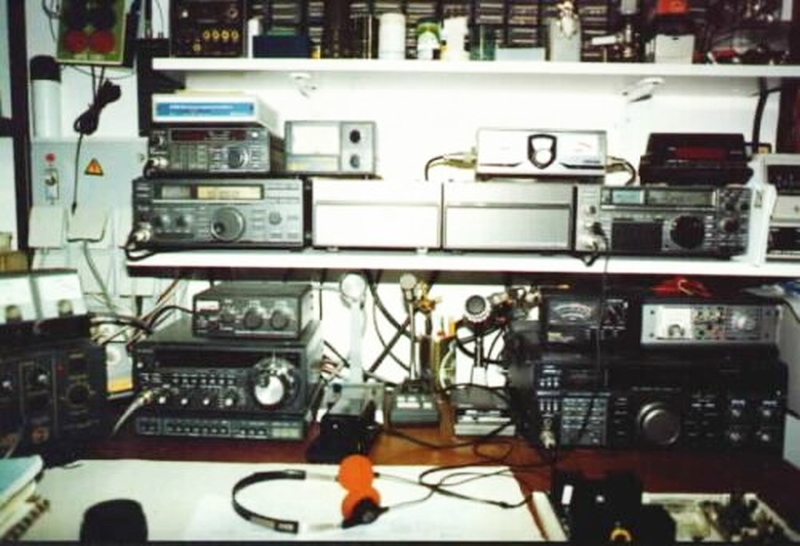
I remember a long room with an equally long workbench overflowing with
marvelous equipment, all equipped with countless knobs and
instruments illuminated by yellow lights. As Raimondo turned on and
tuned various receivers, he let us listen to the voices of many
other amateur radio operators.
The man turned on another device, let out whistles from the receiver's
speaker while he fiddled with the transmitter, waited for a moment's
pause in the chatter, and then spoke into a microphone, establishing
a connection with a colleague, exchanging information and greetings
in a strange language with lots of acronyms starting with Q.
I must have had a peculiar expression on my face, because as soon as
the connection ended, the amateur radio operator looked at me and
asked me what I was thinking. I managed to overcome my shyness and
in response asked if I, too, could perform similar magic.
Raimondo smiled and assured me that it wasn't magic at all. To be
able to talk to distant people, you had to learn a few basics, build
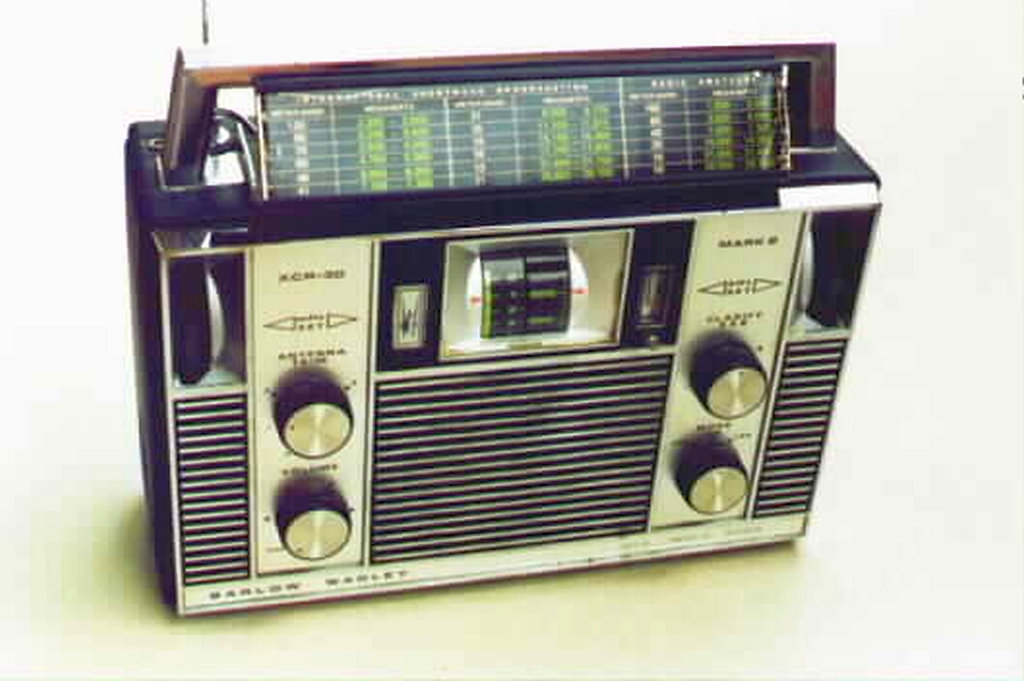
a simple transmitter, slightly modify a home radio to receive their
weak signals, and install a wire as an antenna. As encouragement,
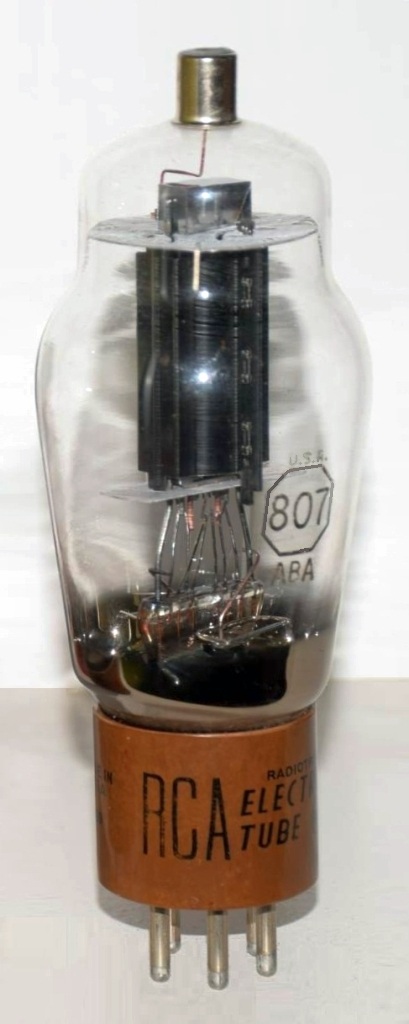
the man rummaged through a drawer and handed me an object made of
glass and Bakelite: "Here, you can build a transmitter with this. Be
careful not to drop it!". It was an 807 tube, an RCA beam power
tetrode with a five-pin socket and a plate connected to an electrode
at the top of the glass envelope.
At the time, only a select few wealthy individuals could afford
amateur radio equipment; almost all amateurs built their own. My
father was a watchmaker, a skilled craftsman, and he immediately
realized the keen interest that Sunday's visit had aroused in his
lanky twelve-year-old son.
My father knew two other radio amateurs, Ennio and Danilo, nicknamed
"Pipa" because he smoked his pipe constantly. It was by following
their teachings, diagrams, and advice that a few months later I
began to realize my dream. As suggested, I had acquired a couple of
old radios from a junkyard. In addition to a few tubes and the
chassis, I was able to salvage a power transformer, two variable
capacitors, various sockets, coils, and many other components. I
purchased the 2 mm rigid copper wire for the power amplifier coil at
a hardware store, and one of the radio amateurs gave me a large old
piezoelectric microphone.
With the help of my father, Ennio, and Danilo, after a lot of work
done while still keeping up with my schoolwork, and after installing
a simple L-shaped wire antenna on the roof, I was able to tune the
transmitter to the 807 at 7 MHz, light up the 6.3-volt bulb soldered
to a coil of insulated copper wire threaded between the coils of the
807's plate coil, and emit a deafening whistle from the speaker of
the Phonola home receiver I had tuned to shortwave, 40-meter range,
where some radio amateurs were chatting.
After removing the tuning lamp, I lowered the receiver volume and
put the TX back into transmission on 40 meters, making a call with
the callsign I1TG, as Danilo had suggested. After finishing the call,
I quickly raised the receiver volume and after a brief pause I heard
a dark, stern voice reply: <<You're not Renato, I know him
very well, and
your voice is too young! Who are you?>>. Scared at being caught out
right away, I quickly turned everything off, but in essence I had
just confirmed that my transmitter was working. It was 1961 and that
was my first radio contact.
That first attempt at connection was followed by others, during
which I was no longer reprimanded becouse I used the formula "second
operator of I1..." as I had been wisely advised. However, my passion
for radio never left me; it shaped my entire life, as I later
graduated in radio engineering. It was thanks to my studies that I
found work in the then-emerging computer and data transmission
industry in the late 1960s, but that's another story entirely.
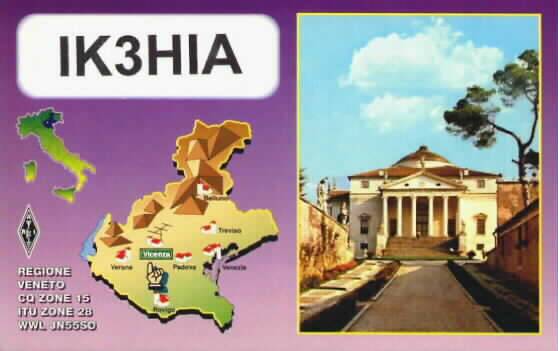
IK3HIA © 2004 |